


Faculty Supervisor:
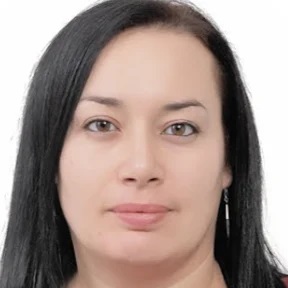 |
Lydia Bouzar-BenlabiodAssociate Professor JSoCS, (Lead) |
 |
Andrew McIntyreAssistant Professor JSoCS (Lead) |
 |
Amir EamanAssistant Professor JSoCS |
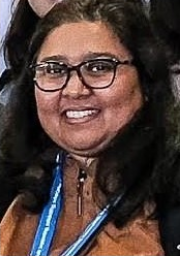 |
Sazia MahfuzAssistant Professor JSoCS |
Lab Members:
PhD Students:
- Joseph O'Neil (2025–present), co-supervised with Dr. Srini(Dalhousie University)
Master's Students:
- Mohamed Khattab (2025–present)
- Mohamed Eshanul (joining Fall 2026)
- Joyce Adeyi (joining Fall 2026)
- Errol DaRocha (joining Fall 2026)
Honours Students :
- Rosemary (joining Fall 2026)
- Shekin Davis (joining Fall 2026)
Research Assistants :
- Rosemary (Honours Summer Research Assistant, Summer 2026)
Rosemary Etu-Efeotor is a fourth-year Computer Science student at Acadia University. This summer, she is conducting research on improving early Alzheimer’s disease detection using explainable AI and convolutional neural networks applied to MRI data. Her work focuses on developing accurate and transparent AI tools to support healthcare decision-making.
- Yassine Ezzaouia (Mitacs Globalink Research Intern)
Mohamed Yassine Ezzaouia is a final-year Data Science Engineering student at the Faculty of Sciences of Tunis, Tunisia.
He has been accepted into the Mitacs Globalink Research Internship 2026 at Acadia University, Canada. His research focuses on privacy-preserving machine learning for healthcare, particularly using Differential Privacy and Homomorphic Encryption. Through his project, he will study the trade-off between protecting sensitive patient data and maintaining strong model performance. He is passionate about developing trustworthy, ethical, and privacy-aware AI systems for real-world healthcare applications.
- Ahmed Sabbeh (Mitacs Globalink Research Intern)
Alumni:
2024
- Joy Wairimu Ndirangu — Honours, Computer Science — September 2024

Thesis: Enhancing Interpretability in Deep Learning Models for Breast Cancer Detection
Abstract: This thesis applies two CNN architectures — AlexNet and Houby & Yassin's CNN — to classify mammographic images from the KAU-BCMD dataset into BI-RAD categories, addressing the "black-box" problem in deep learning diagnostics using SHAP-based explainability techniques. The models achieved strong performance, with AUC scores of 0.925 and 0.932, and F1-scores of 76.7% and 79.4%, respectively. Meanwhile, SHAP analysis highlighted the key image regions driving each prediction, helping to bridge the trust gap between deep learning systems and radiologists.
The link to the paper : Click Here
- Errol DaRocha — Honours, Computer Science — December 2024
Thesis: A Comparison of Autoencoders and Variational Autoencoders for Anomaly Detection in Dermoscopic Images
Abstract: This thesis compares Autoencoder (AE) and Variational Autoencoder (VAE) architectures for unsupervised anomaly detection in dermoscopic skin images using the HAM10000 dataset of 10,015 images. Both models were trained on normal (benign) data and evaluated on their ability to distinguish benign from malignant lesions via reconstruction error. Averaged across 30 training runs, the AE outperformed the VAE in accuracy (71.84% vs. 67.79%), F1-score (73.03% vs. 67.33%), and False Negative Rate (23.76% vs. 33.58%), suggesting AE architectures as a promising and scalable approach for automated early skin cancer detection.
The link to the paper : Click Here
- Joseph O'Neill — Master of Science, Computer Science — Fall 2024

Thesis: A Fully Secure Approach to Privacy-Preserving Machine Learning for Satellite Image Classification
Abstract: This thesis proposes a fully secure privacy-preserving machine learning system for satellite image classification by combining the CKKS homomorphic encryption scheme with Support Vector Machines (SVMs). Unlike existing approaches that sacrifice full security for accuracy, this system encrypts both the images and the ML model using 128-bit AES equivalent encryption, enabling ciphertext-to-ciphertext predictions in the cloud without ever exposing raw data. Preliminary results demonstrate classification at roughly 30,000 images per hour with 87% accuracy — matching the unencrypted baseline — confirming that fully secure image classification is achievable without loss of performance.
The link to the paper : Click Here
2025
- Chenuka Gamage — Honours, Computer Science — Winter 2025

Thesis: Early Diagnosis of Alzheimer's Disease Using 3D Convolutional Neural Networks
Abstract: This thesis presents a 3D Convolutional Neural Network (3D CNN) approach for the automated early detection of Alzheimer's disease using FDG-PET scans from the ADNI dataset. After preprocessing the scans into standardized 64×64×64 voxel volumes, the model was evaluated across ten independent test runs, achieving an average accuracy of 71.25% and a best run accuracy of 78.75%. These results demonstrate the potential of 3D CNNs as a foundation for deep learning-based diagnostic tools in resource-limited medical settings.
The link to the paper: Click Here
- Hamza Ben Alla — Honours, Computer Science — April 2025

Thesis: Enhancing Early Alzheimer's Diagnosis with Interpretable 3D CNN Models Using MRI Scans
Abstract: This thesis presents a 3D CNN model built from scratch to classify stages of Alzheimer's disease using MRI scans from the ADNI dataset, in both binary and multi-class settings. Through a carefully designed preprocessing pipeline and optimized hyperparameter tuning, the model achieved 94.37% accuracy in multi-class classification (AD, MCI, and CN) and 91.79% in binary classification (AD vs. CN), outperforming several state-of-the-art models. Interpretability was added using an occlusion-based technique, which confirmed the model's focus on clinically relevant brain regions including the hippocampus, amygdala, and thalamus.
The link to the paper: Click Here
- Excellence Sowunmi — Master of Science, Computer Science — Spring 2025

Thesis: OLS with Internal Subsymbolic Learning and Reasoning Using Cross-Modality Autoencoders
Abstract: This thesis introduces a cross-modal autoencoder architecture that bridges the gap between neural and symbolic AI by learning bidirectional transformations between images and text. Built on the neuro-symbolic framework of Silver and Mitchell, the model distinguishes between internal subsymbolic (conrep) and external symbolic (symrep) representations, enabling both perceptual understanding and abstract reasoning across modalities. Using a shared reasoning layer, selective input masking, and curriculum-based training, the system achieves stable and accurate cross-modal reconstruction even when one modality is masked — with applications in computer vision, natural language processing, and multimodal reasoning.
The link to the paper: Click Here
- Kylie DeViller — Honours, Computer Science — December 2025

Thesis: From Seed to Algorithm: A Comparative Analysis of Genome-wide Association Study and Random Forest for Genomic Trait Prediction in Apple
Abstract: This thesis applies two computational approaches — a multi-locus mixed model GWAS and a Random Forest algorithm — to analyze approximately 19 million SNPs from 504 apple accessions in Canada's Apple Biodiversity Collection, with the goal of identifying genetic markers linked to physical traits such as shape and size. GWAS successfully identified one SNP significantly associated with circularity, while Random Forest generalized poorly and yielded no significant markers. The findings highlight the current limitations of machine learning for complex genomic trait discovery and point toward future exploration of alternative algorithms to better support apple breeders in incorporating genomic insights into cultivar development.
The link to the paper: Click Here
2026
- Mohammod Ehsanul Haque — Honours, Computer Science — April 2026

Thesis: A SMOTE-Based Approach for Minority Attack Detection in Intrusion Detection Systems
Abstract: This thesis tackles the challenge of class imbalance in intrusion detection by proposing a CNN–BiLSTM hybrid model trained on the UNSW-NB15 dataset, which contains over 2.5 million network flow records with an imbalance ratio exceeding 12,000:1. While a baseline model achieved 98% overall accuracy, its Macro F1-score of only 0.5081 revealed near-zero detection of rare attack types. Applying categorical-aware SMOTE-NC oversampling with 20,000 samples per minority class improved the Macro F1-score to 0.5307, and further hyperparameter tuning boosted Worms detection from 8.11% to 75% — the largest single-class gain in the study — while maintaining 99.14% binary classification accuracy.
The link to the paper: Click Here
- Brendan Toscano — Honours, Computer Science — April 2026
Thesis: Machine Learning Evaluation of Generative AI Debugging Feedback Plausibility for Introductory Python Programming
Abstract: This thesis investigates whether the plausibility of LLM-generated debugging feedback can be estimated using computable features derived from the IntroPyNUS dataset. After cleaning and processing 10,548 records of buggy student submissions, the study defined features for repair correctness, feedback relevance, hint concealment, and repair minimality, then trained binary and multi-class ML evaluators on four Python problems and tested them on a held-out fifth. The best binary evaluator — a five-feature Linear SVM — achieved 92% accuracy and an F1 score of 0.76, while a three-feature Random Forest reached a macro F1 of 0.876 without access to correctness labels. Applying these evaluators to four modern LLMs (GPT-5.2, GPT-4.1, GPT-4-Turbo, and Claude Opus 4.6) revealed that passing unit tests is not enough to judge tutoring quality: GPT-5.2 achieved the highest repair pass rate at 99% but the lowest plausibility rate, while Claude Opus 4.6 produced the most minimal and educationally grounded repairs.
The link to the paper: Click Here
- Ibrahim Harunur Rashid — Honours, Computer Science — April 2026

Thesis: Deep Learning Approaches for Sensor-Based Human Activity Recognition
Abstract: This thesis investigates deep learning techniques for smartphone accelerometer-based Human Activity Recognition (HAR), comparing MLP, CNN, and CNN-LSTM architectures across the UCI-HAR, WISDM, and HHAR datasets. The CNN achieved the highest in-domain accuracy at 96.2%, while the CNN-LSTM showed the most consistent cross-validation results. However, when trained on UCI-HAR and tested on HHAR, performance dropped sharply to 17%, highlighting significant challenges in cross-dataset generalization due to device and domain mismatch. Data augmentation provided modest improvements but did not resolve the gap. SHAP interpretability analysis revealed that the X-axis accelerometer channel and transient motion segments contribute most to predictions, confirming the models learned physically meaningful patterns.
The link to the paper: Click Here